These are the ten questions from War Dossier daily challenge #41, of 2 November 2026, with the correct answer and an explanation for each. Today's challenge is a different one and it is free to play.
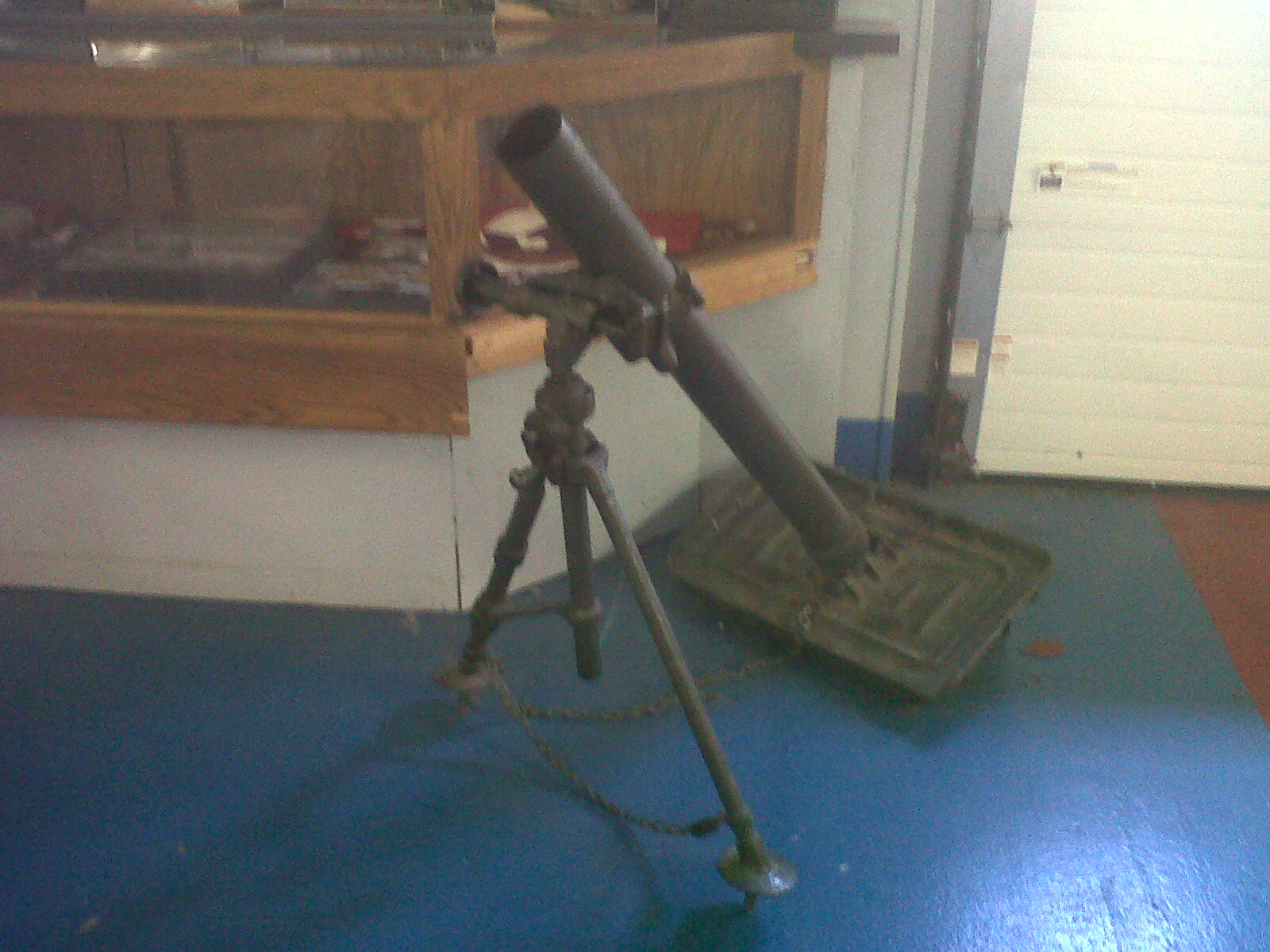
Which infantry weapon is shown in this museum photograph?
M1 81 mm mortar
M1 57 mm anti-tank gun
M101 105 mm howitzer
90 mm anti-aircraft gun
It is identified by its short, smooth tube resting on a bipod, with no wheels or shield, and a flat base plate: the classic configuration of an infantry mortar.
2 / 10
What consequence did the final banzai charge at Attu have for the Japanese defense of the island?
It ended organized Japanese resistance on Attu
It allowed the recovery of Massacre Bay
It forced the American withdrawal from the island
It forced a temporary truce
After this attack, organized Japanese resistance on Attu came to an end.
3 / 10
In what year did Glenn Miller join the US Army Air Forces to form his military band?
1942
1938
1944
1940
Miller enlisted in 1942 and organised an orchestra within the Army Air Forces.
4 / 10
Which 1943 Allied operation was planned from Malta's underground command tunnels?
The invasion of Sicily (Operation Husky)
The Normandy landings
Operation Market Garden
The Guadalcanal landings
From the underground command rooms in Valletta, General Eisenhower and the Allied commanders (Cunningham, Montgomery, Tedder) directed the 1943 invasion of Sicily, Operation Husky.
5 / 10
How were the B-29's forward and aft pressurized compartments connected?
By a pressurized tunnel running over the bomb bays
Through an external hatch requiring crew to exit the aircraft
They were not connected; each zone was independent
By a lift running through the lower fuselage
The pressurized tunnel above the bomb bays allowed crew to move between both zones without depressurizing.
6 / 10
Unlike the Elefant, which mounted a long-range gun, what type of weapon did the Sturmtiger carry instead?
a short-range rocket mortar
a flame projector
a twin heavy machine gun
an anti-aircraft gun
Compared to the Elefant's long-range anti-tank gun, the Sturmtiger carried a rocket mortar meant for short ranges.
7 / 10
What achievement stands out for the D3A1 Val in the first year and a half of the Pacific War?
It sank more Allied ships than any other Axis aircraft
It was the first Japanese aircraft with retractable landing gear
It carried the Ohka on its first mission
It was the bomber with the greatest range of the war
In its first 18 months of service in the Pacific, the D3A1 sank more Allied tonnage than any other Axis aircraft, taking part in attacks such as Pearl Harbor and campaigns against Allied carriers in the Indian and Pacific Oceans.
8 / 10
Which Axis operation directly inspired the development of the British Chariot?
The Italian Maiale torpedo attack on Alexandria harbour (1941)
The Japanese attack on Pearl Harbor (1941)
The sinking of the battleship Bismarck (1941)
The German bombing of Coventry (1940)
The success of Italian Maiale torpedoes against Alexandria in December 1941 spurred British development of the Chariot.
9 / 10
Just like the studies that distinguished breakdown from combat destruction, the analysis of the 'kills' claimed by both sides shows that...
the count made in the heat of battle rarely matches the real number of vehicles lost
each army kept a reliable, near-exact record of its own losses even in the middle of combat
post-war archives tended to confirm most of the combat reports filed at the time
the claimed figure tended to fall short of the real number of vehicles lost
In both cases, later examination of the facts showed that the immediate battlefield count usually differed from the real outcome.
10 / 10
What position had the American command initially held regarding the use of heavy fire on Manila?
Restrict it to limit destruction and civilian casualties
Use it from day one without any restriction
Ban it completely throughout the battle
Delegate the decision to Filipino guerrillas
The American command initially tried to limit heavy fire to protect the city and its inhabitants, before progressively authorizing it in the face of Japanese resistance.
Today's challenge is another ten questions. No sign-up, nothing to install.