1 / 10
What type of fighter appears in this photograph taken on the Aleutian front?
- the P-38 Lightning
- the P-40 Warhawk
- the F4F Wildcat
- the Zero A6M
The image shows a P-38 Lightning from a unit based in Alaska.
War Dossier › Archive › Challenge #40
These are the ten questions from War Dossier daily challenge #40, of 1 November 2026, with the correct answer and an explanation for each. Today's challenge is a different one and it is free to play.
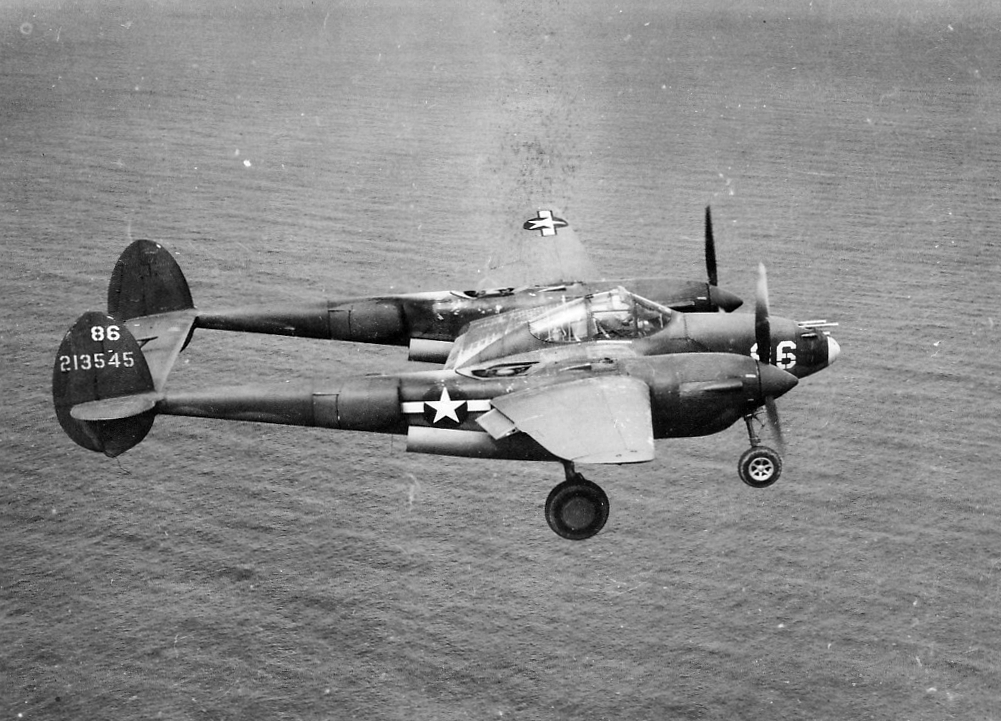
The twin-engine P-38 Lightning fighter operated on the Aleutian front for its greater range and the safety a second engine offered over freezing seas and constant fog. Squadrons based at Adak and Attu used it for escort and interception, though weather conditions caused more losses than air combat.
1 / 10
The image shows a P-38 Lightning from a unit based in Alaska.
2 / 10
It was set for 1 August 1944.
3 / 10
In the grim days after Pearl Harbor, Wake's resistance was publicized as an example of American resolve.
4 / 10
The Fourth Offensive, known as Operation Weiss, began in late January 1943.
5 / 10
The engine's constant roar combined with the gun's blast caused, over time, partial deafness and persistent ringing in many tankers.
6 / 10
The British defence, stronger than expected, convinced the German command that Fighter Command remained an operational force.
7 / 10
The Toldi I carried a 20 mm Solothurn automatic gun, adequate against light armour but soon outmatched by better-protected Soviet tanks.
8 / 10
The Pak 40 (75mm) penetrated about 96mm at 500m, while the Pak 43 (88mm) reached 165mm at 1,000 metres — doubling its penetration even at greater range, thanks to its much longer barrel and higher muzzle velocity.
9 / 10
He did not fall in his Zero, but unarmed, as a passenger in a transport intercepted by enemy fighters.
10 / 10
Unlike the other episodes, which affected specific positions or sectors, this one led to the surrender of an entire country.
Today's challenge is another ten questions. No sign-up, nothing to install.
Play today's challenge