These are the ten questions from War Dossier daily challenge #39, of 31 October 2026, with the correct answer and an explanation for each. Today's challenge is a different one and it is free to play.
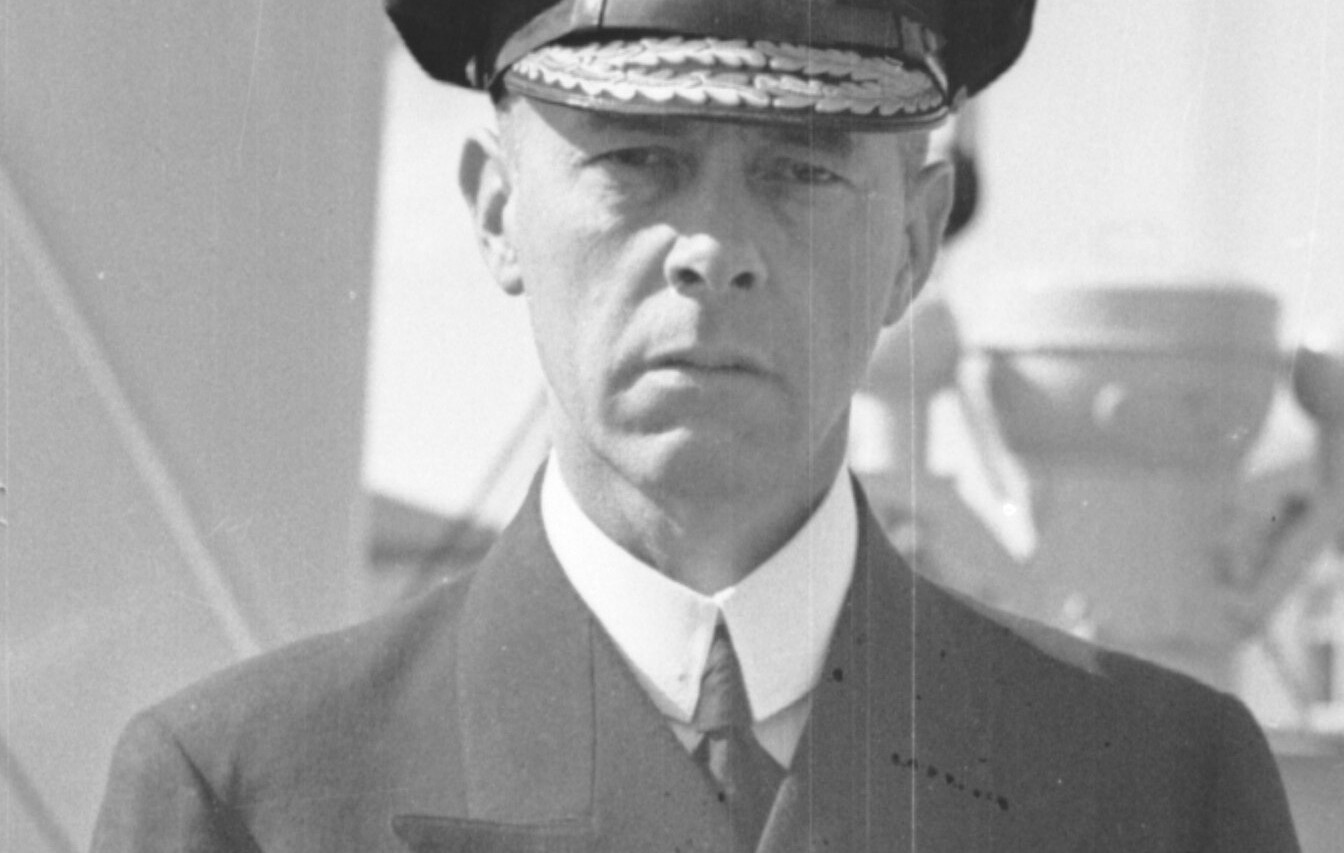
Credit: Bundesarchiv Bild 101II-MW-0434-05A, fotografo desconocido · Licence: CC BY-SA 3.0 DE, recorte propio para excluir insignias · View at original source
The dossier entry: El almirante Günther Lutjens
Gunther Lutjens, chief of the Kriegsmarine's fleet since 1940, led both the early-1941 Atlantic raid by Scharnhorst and Gneisenau and the subsequent sortie of Bismarck and Prinz Eugen. He died aboard Bismarck on 27 May 1941, along with almost his entire staff.
Challenge answers
1 / 10
Which German admiral, fleet chief during the Bismarck operations, is portrayed in this photograph?
Gunther Lutjens
Erich Raeder
Karl Donitz
Otto Ciliax
This is Gunther Lutjens, the fleet chief who commanded both Operation Berlin and Bismarck's sortie.
2 / 10
How did Soviet resistance at Odessa finally end around mid-October 1941?
The garrison was evacuated by sea to Sevastopol
The garrison surrendered en masse to Romanian troops
A Soviet counteroffensive broke the siege
A permanent truce was signed with Axis command
Given the growing threat to Crimea, Soviet command chose to evacuate the garrison by sea to Sevastopol rather than leave it trapped.
3 / 10
Who devised this raid on Cologne to demonstrate the potential of mass bombing?
Arthur Harris
Richard Peirse
Charles Portal
Norman Bottomley
Arthur Harris, newly appointed head of Bomber Command, devised this raid to demonstrate the potential of large-scale concentrated bombing.
4 / 10
Approximately how far did the Soviet fronts advance, from the start of the Belorussian offensive (Operation Bagration), until nearing the Polish capital?
More than 500 kilometres
Barely 50 kilometres
About 100 kilometres
More than 2,000 kilometres
The Soviet fronts advanced more than 500 kilometres from the start of the offensive to the outskirts of Warsaw.
5 / 10
Which British aircraft carrier was lost during Operation Pedestal, sunk by a German submarine?
HMS Eagle
HMS Ark Royal
HMS Illustrious
HMS Victorious
HMS Eagle was torpedoed by the submarine U-73 shortly after sailing, with the loss of most of her crew.
6 / 10
Many Marines emptied their canteens during the very first night. What worsened that thirst?
The heat and the exertion of combat without relief
Constant torrential rain
Voluntary water rationing
A ban on drinking by day
The tropical heat and the continuous exertion of combat, with hardly any relief, multiplied the need for water.
7 / 10
Unlike Los Alamos, the laboratory he directed, what role did Oppenheimer have in Chicago Pile-1, the reactor built at the University of Chicago?
None directly, since that reactor was the work of Enrico Fermi's team
He was the chief engineer of its construction
He was the one who withdrew the last control rod
He was the author of its structural design
Chicago Pile-1 was designed and operated by Enrico Fermi's team in Chicago, a project independent of Oppenheimer's design work at Los Alamos.
8 / 10
In what earlier conflict, before World War II, had the M1897 shotgun already been used, earning both fame and enemy protests?
World War I
The U.S. intervention in Mexico (Punitive Expedition)
The Russo-Japanese War
The Korean War
The M1897 had already proven devastatingly effective in the trenches of World War I, where Germany formally protested its use, unsuccessfully claiming it violated the laws of war. In service since 1917, it remained in use twenty-five years later in the Pacific.
9 / 10
In what year was the British ATS founded?
1938
1942
1933
1940
The ATS was founded in 1938, even before the outbreak of the war in Europe.
10 / 10
Which American army reached the Dachau camp on 29 April 1945?
The U.S. Seventh Army
The U.S. Third Army
The First Canadian Army
The British Eighth Army
Dachau was liberated on 29 April 1945 by units of the U.S. Seventh Army, including the 42nd and 45th Infantry Divisions.
Today's challenge is another ten questions. No sign-up, nothing to install.