These are the ten questions from War Dossier daily challenge #38, of 30 October 2026, with the correct answer and an explanation for each. Today's challenge is a different one and it is free to play.
Credit: Desconocido (fotografia de epoca, Japon) · Licence: PD-Japan-oldphoto / PD-1996 · View at original source
The dossier entry: La inteligencia de Richard Sorge sobre Japón
Richard Sorge, a Soviet agent operating undercover in Tokyo as a German journalist, informed Moscow in the autumn of 1941 that Japan had no intention of opening a front against the USSR and would instead direct its expansion southward, against British, Dutch and American possessions. This assessment, confirmed weeks later by the Japanese attack on Pearl Harbor, allowed the Soviet command to transfer divisions from the Far East to the Moscow front with greater confidence.
Challenge answers
1 / 10
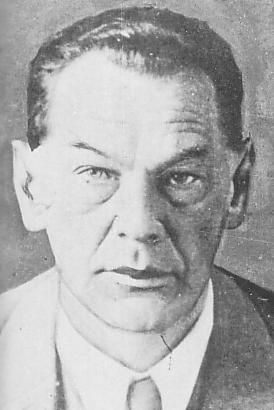
Who does this photograph portray?
The Soviet agent who reported on Japanese intentions in 1941
A Soviet marshal in command of the defence of Moscow
A German officer captured during Operation Typhoon
A British correspondent stationed in Moscow
The photograph portrays Richard Sorge, the Soviet agent working undercover in Tokyo.
2 / 10
In what year were the Whale floating roadways first used?
1944
1941
1943
1946
The Whale roadways were installed together with the rest of the Mulberry system starting in June 1944, immediately after the Normandy landings, to connect the pierheads with the beach.
3 / 10
Which of these topics of the western campaign revolved around a strategy debate among the Allied generals?
Eisenhower's SHAEF command, with 'broad front' versus 'narrow thrust'
The Red Ball Express and the transport of supplies
The resistance of the Atlantic fortress ports
The reduction of the Colmar Pocket
The 'broad front' versus 'narrow thrust' debate defined the Allied command under Eisenhower at SHAEF; the other options were not strategy debates of that kind.
4 / 10
Why was the conquest of Okinawa considered a decisive step in the 1945 Allied strategy?
It was planned as a staging base ahead of the invasion of the Japanese home islands
It was the only source of oil in the western Pacific
It allowed cutting supplies to Japanese troops in the Philippines
It served to free Allied prisoners held there en masse
Okinawa was sought as an advanced air and naval platform for the planned invasion of Japan.
5 / 10
Like Germany, Japan was also subjected during the occupation to...
the demilitarization and dissolution of its armed forces
partition into four occupation zones
the creation of a four-power tribunal
the joint administration of its capital
Both countries were demilitarized, though Japan was not split into zones nor had its capital divided as happened with Berlin.
6 / 10
Besides the regular British army, what other type of force received air-dropped Stens during the war?
Resistance groups equipped by the SOE
Only the Royal Canadian Mounted Police
Only submarine naval units
Only colonial forces in India
Thanks to its low cost and extremely simple design, the Sten was air-dropped to European resistance groups armed by Britain's Special Operations Executive (SOE), including partisan cells in France, Poland, and other occupied territories.
7 / 10
Unlike the slower, costlier advance of the campaign's early phase on the Kokoda Track, what result did this coastal-leap strategy aim for?
Reducing Allied casualties and speeding up the pace of reconquest
Deliberately prolonging the conflict to wear Japan down
Concentrating all possible casualties on a single front
Completely avoiding the use of Allied aviation
In contrast to the attrition at Kokoda, the coastal-leap strategy sought faster advances with fewer casualties.
8 / 10
In what year was the Office of War Information created?
1942
1939
1945
1917
The agency was established in 1942, with the United States already at war.
9 / 10
What types of Japanese tank were used in the assault on Slim River?
Type 97 and Type 95 tanks
Type 3 Chi-Nu tanks
Captured Sherman tanks
Type 94 tankettes only
The Japanese armoured column combined Type 97 medium tanks and Type 95 light tanks, supported by motorised infantry.
10 / 10
What extra armour solution appears on the nose and gun mantlet of the Panzer III L/M versions?
A double armour plate
Explosive reactive armour
Composite ceramic plates
A layer of reinforced concrete
The L and M versions added a double armour plate or 'spaced armour' on the nose and mantlet, a simple way to boost protection without redesigning the whole hull.
Today's challenge is another ten questions. No sign-up, nothing to install.