These are the ten questions from War Dossier daily challenge #2, of 24 September 2026, with the correct answer and an explanation for each. Today's challenge is a different one and it is free to play.
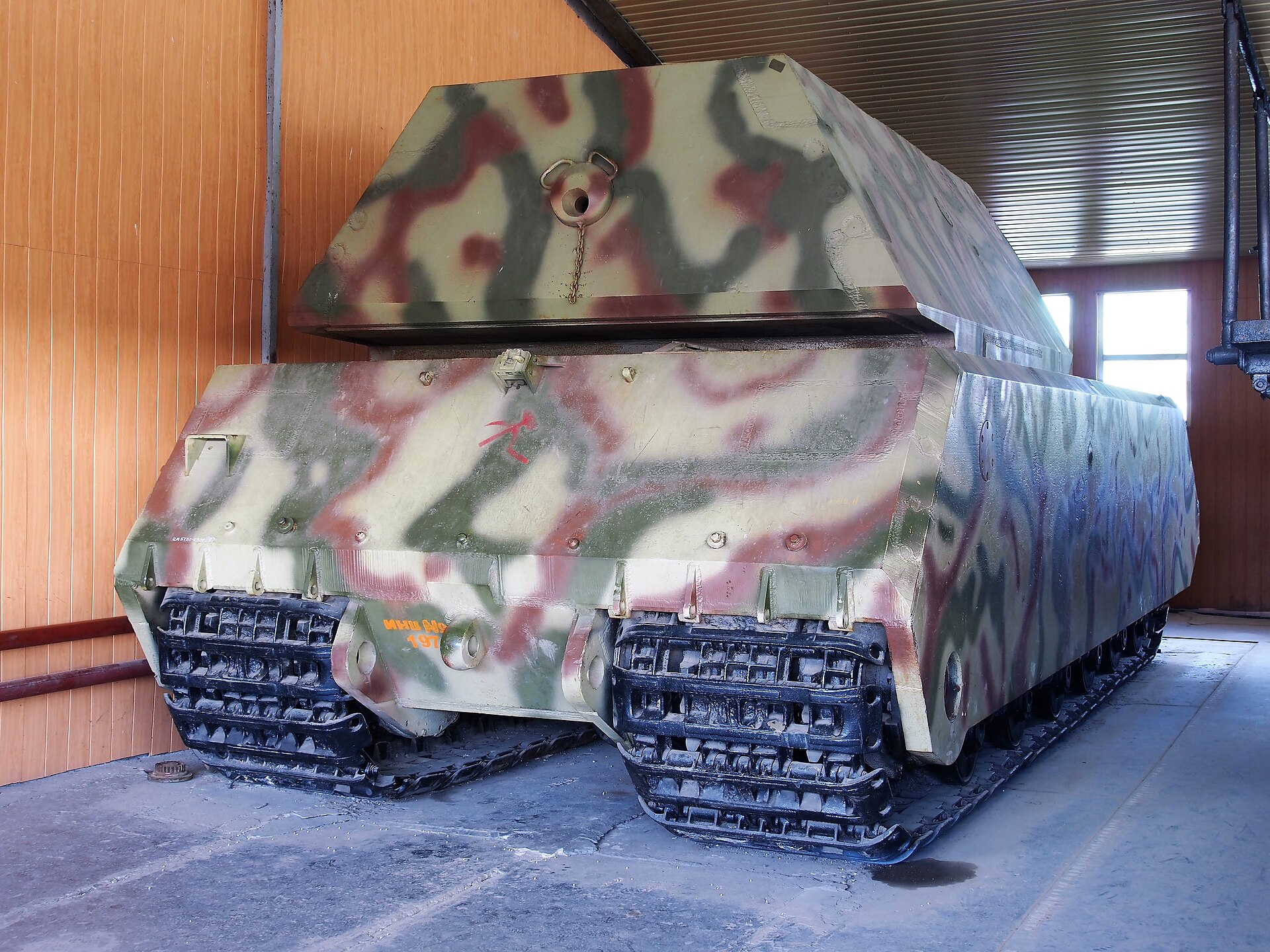
Credit: Alf van Beem · Licence: Dominio publico (CC0, dedicacion del autor) · View at original source
The dossier entry: Aberdeen y Kubinka: evaluar los tanques del enemigo
The United States and the Soviet Union kept dedicated centers for stripping down and testing captured enemy armor: Aberdeen Proving Ground in Maryland and the secret Kubinka range near Moscow. There, examples of the Tiger, Panther, or the Maus itself - captured in 1945 - were subjected to live fire to understand their strengths and weaknesses before facing them in combat.
Challenge answers
1 / 10
Which German prototype, the heaviest armored fighting vehicle ever completed, is preserved today at the Kubinka museum after its 1945 capture?
The Panzer VIII Maus
The Jagdtiger
The E-100
The Sturer Emil
The photograph shows the Panzer VIII Maus, preserved today at the Kubinka museum after its capture in 1945.
2 / 10
About how many days did the Battle of Okinawa last?
82 days
36 days
120 days
20 days
The battle lasted about 82 days, from April 1 to June 22, 1945.
3 / 10
In what month of 1945 did Germany surrender, ending the activity of the last Panzer units?
May
March
January
July
Germany's unconditional surrender was signed on 8 May 1945.
4 / 10
Unlike the advantage that terrain offers in a hull-down position during the day, the advantage of the Sperber infrared equipment in a night duel depended on...
only the crew itself being able to see in the dark while the enemy remained blind
the height of a hill that hid the vehicle's hull
the existence of a hedge or wall blocking the enemy's view
extra armor fitted to the front
While hull-down exploited the terrain's relief, the Sperber's advantage was purely technological: seeing without being seen in the dark.
5 / 10
Which region concentrated the deepest underlying differences among the Allies over the division of influence?
Eastern and Central Europe
North Africa
Southeast Asia
Latin America
The disagreements centred on the future of Eastern and Central European countries already reached by the Red Army.
6 / 10
Why is the Panzerfaust said to have been a dangerous weapon even for barely-trained troops like the Volkssturm?
It was extremely simple to use, requiring almost no training
It was a reusable weapon the same soldier could fire multiple times in combat
It featured a precision telescopic sight
It weighed over 50 kg and needed two people
Its simplicity of use (aim and pull the trigger) meant even barely-trained Volkssturm militia could use it effectively against Allied tanks, making it a dangerous 'equaliser' right up to the end of the war.
7 / 10
Who was the viceroy and commander of Italian forces in East Africa?
Amedeo of Savoy, Duke of Aosta
Rodolfo Graziani
Italo Balbo
Pietro Badoglio
Amedeo of Savoy, Duke of Aosta, was the viceroy and commander of Italian forces in East Africa.
8 / 10
What kind of military operations were most affected by the poor visibility?
Aerial reconnaissance and bombing
Radio communications
Rail transport
Ammunition production
Reconnaissance and bombing aviation depended on visibility that rarely existed.
9 / 10
In what year did the Burma Road open to supply China?
1938
1931
1941
1944
The road was completed and opened in 1938 after Japan blockaded China's ports.
10 / 10
Among these Axis commanders who died on their own battlefield, who died by ritual seppuku alongside his chief of staff, rather than in direct combat or by a tribunal's sentence?
The general commanding the 32nd Army on Okinawa
The general commanding the 109th Division on Iwo Jima
The admiral commanding the carrier force at Pearl Harbor
The general who was Prime Minister of Japan
Ushijima died by ritual seppuku alongside his chief of staff; Iwo Jima's defender died under uncertain combat circumstances, the Pearl Harbor admiral shot himself alone, and the former prime minister was executed after a trial.
Today's challenge is another ten questions. No sign-up, nothing to install.