WW2 trivia · daily challenge archive

War Dossier › Archive › Challenge #12

Leer este reto en español

Challenge #12

These are the ten questions from War Dossier daily challenge #12, of 4 October 2026, with the correct answer and an explanation for each. Today's challenge is a different one and it is free to play.
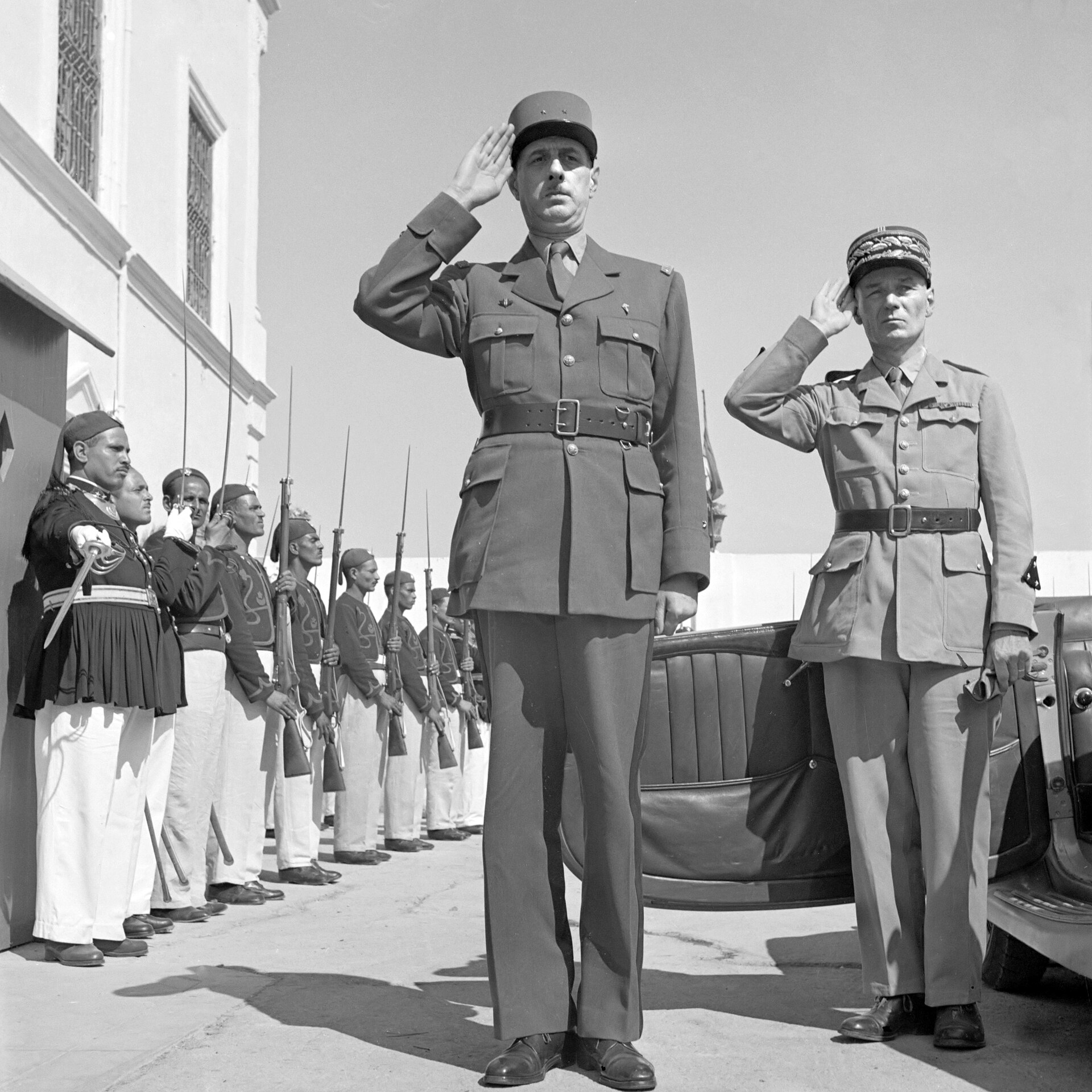
Which general appears in this photograph taken during the Second World War?
Credit: Marjory Collins · Licence: Dominio publico (US Office of War Information / Library of Congress) · View at original source

The dossier entry: De Gaulle, el invitado incómodo

Charles de Gaulle led the Free French and later the French Provisional Government, yet he was excluded from the major inter-Allied conferences at Tehran and Yalta, where the United States, the United Kingdom and the USSR decided much of Europe's future without his presence. Roosevelt distrusted his political ambitions, while Churchill argued, not without friction, for a larger role for France. In the end, thanks largely to British insistence, France secured an occupation zone in Germany and a permanent seat on the future UN Security Council.

Challenge answers

1 / 10

Which general appears in this photograph taken during the Second World War?

  • Charles de Gaulle
  • Dwight Eisenhower
  • Bernard Montgomery
  • Philippe Pétain

The photograph shows Charles de Gaulle, leader of the Free French, in Tunisia in 1943.

2 / 10

Which army, of which these mule companies formed part, did most of the porters and pack animals in Burma belong to?

  • The British Indian Army
  • The Imperial Japanese Army
  • The Chinese Nationalist Army
  • The U.S. Army

Mule companies of the Royal Indian Army Service Corps sustained much of the 14th Army's ground transport.

3 / 10

What word of military origin, now adopted in hospital emergency rooms, became widespread during the Second World War?

  • Triage
  • Quarantine
  • Freeze-drying
  • General anaesthesia

Triage, prioritising casualties by severity, was consolidated in the war and endures in today's emergency care.

4 / 10

What additional role did Suda Bay play at the end of the Battle of Crete, in late May 1941?

  • It was one of the embarkation points during the Allied evacuation
  • It was where the German surrender was signed
  • It became an Italian submarine base
  • It hosted the first Greek collaborationist government

Besides being a supply base, Suda Bay served as one of the points from which some Allied troops were evacuated as the island's defence collapsed.

5 / 10

In what year was the Devil's Brigade organised?

  • 1942
  • 1940
  • 1944
  • 1939

The unit was organised in 1942, combining volunteers from two Allied armies.

6 / 10

How were the PLUTO pumping stations on the English coast disguised to preserve secrecy?

  • As bungalows, farms, garages and even an ice cream shop
  • As abandoned churches
  • As disused coastal lighthouses
  • They were not disguised, they were heavily guarded and visible

To avoid drawing the attention of German intelligence or possible attacks, the pumping stations were camouflaged as ordinary civilian buildings, including bungalows, barns, garages and even an ice cream shop.

7 / 10

Which of these elements was part of the garrison's internal supply system, rather than depending on seaborne transport from outside?

  • The garrison's water and food rationing
  • The nightly convoy service to Tobruk
  • The close-support gunboat squadron
  • The relief of troops carried by ship

Unlike the supply convoy or the troop relief, this system relied on resources generated within the perimeter itself, such as seawater distillation.

8 / 10

By what system were the warning leaflets scattered over the Japanese target cities?

  • Leaflet bombs dropped from B-29s
  • Incendiary balloons released from submarines
  • Pamphlets thrown by hand from escort fighters
  • Shortwave radio broadcasts

The leaflets were packed into special bombs that opened in the air and scattered the flyers over wide urban areas.

9 / 10

Unlike the Bergepanther, which operated in the rear, which of these vehicles needed close panzergrenadier escort, according to its combat record?

  • The Elefant
  • The Sturmtiger
  • The Flammpanzer III
  • The Panzerbefehlswagen

Lacking a secondary machine gun in its first combat, the Elefant especially needed nearby infantry protection.

10 / 10

What hull feature distinguished Gato-class submarines, and how did their conning tower evolve in later variants?

  • A partial double hull, with the conning tower (fairwater) reduced in later variants
  • A single hull with no conning tower of any kind
  • A reinforced triple hull with a fixed, unchanging conning tower
  • A wooden hull with a glass conning tower

The Gatos had a partial double hull, and as the war progressed, the conning tower (fairwater) was progressively reduced in size on later variants to present a smaller silhouette to radar and enemy lookouts.

Today's challenge is another ten questions. No sign-up, nothing to install.

Play today's challenge