These are the ten questions from War Dossier daily challenge #6, of 28 September 2026, with the correct answer and an explanation for each. Today's challenge is a different one and it is free to play.
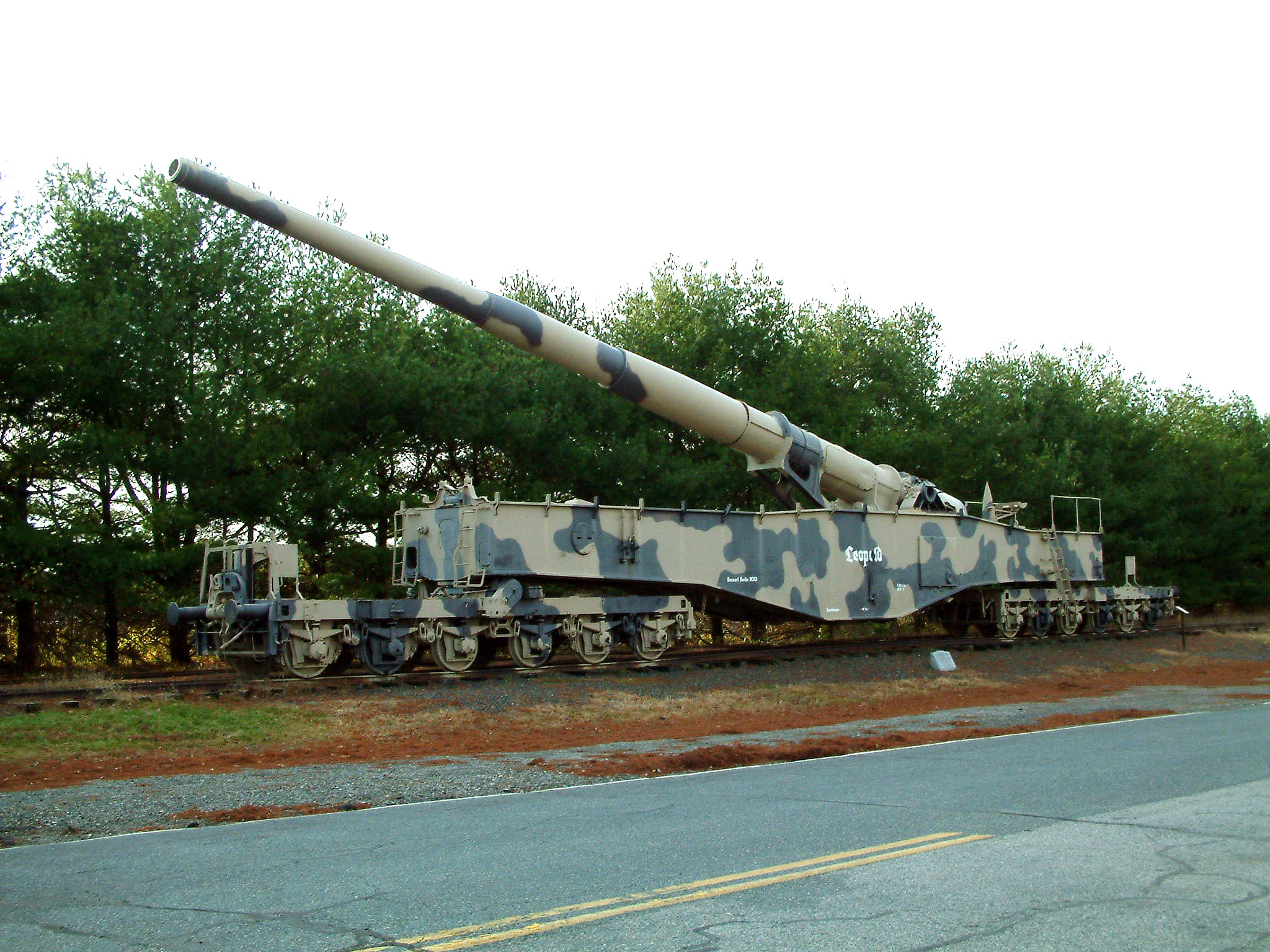
This surviving railway gun, on display in the US, was nicknamed 'Anzio Annie' by the Allies. Which model is it?
Krupp K5
Schwerer Gustav
Karl-Gerät
K12(E) 21 cm railway gun
This is the Krupp K5, a 28 cm railway gun; the example shown, nicknamed 'Leopold' by its German crew, is displayed in a US Army museum after being captured in Italy.
2 / 10
Why was it so important for the Allies to capture Cherbourg as soon as possible?
The only deep-water port, needed for reinforcements and heavy supplies
It was the seat of the German high command in France
It allowed the linkup of the Utah and Omaha beachheads
It housed the main German submarine shipyards
Without a deep-water port, the Allies depended only on the beaches and improvised facilities to land reinforcements and heavy equipment.
3 / 10
On what day did the Berlin garrison surrender?
2 May 1945
8 May 1945
30 April 1945
20 April 1945
The Berlin garrison surrendered on 2 May 1945.
4 / 10
What extra equipment did the fighters need to cover the long distance to Bougainville and back?
External drop tanks
Spare engines carried on board
Mid-air refueling
A stopover on a carrier
External drop tanks extended the fighter's range enough to allow the round trip of more than 1,400 km.
5 / 10
How close to Tunis did the most advanced Allied elements get?
Just over twenty kilometers away, near Djedeida
More than a hundred kilometers away, without ever sighting the city
They briefly entered the outskirts of Tunis itself
They stopped more than two hundred kilometers away, near the Algerian border
Allied vanguards came within sight of Tunis from the vicinity of Djedeida, just over twenty kilometers away.
6 / 10
What did German forces do to blunt the Soviet push on the Vistula?
Launch counterattacks with panzer divisions
Withdraw without offering resistance
Request an immediate armistice
Completely abandon the central front
Counterattacks by German panzer divisions helped blunt the Soviet push in front of the Vistula.
7 / 10
In what year was the first ABSD floating drydock deployed in the Pacific?
1943
1941
1945
1939
The first sections of ABSD-1 (Artisan) arrived at Espiritu Santo in the New Hebrides starting in September 1943, marking the start of these giant drydocks' deployment in the Pacific.
8 / 10
What did the surrender negotiated in Operation Sunrise mean for World War II in Europe as a whole?
It was the first large-scale German surrender, days before Germany's general capitulation
It was the last German surrender, occurring after the signing in Berlin
It ended the war on the Pacific front
It marked the start of the Italian campaign
The Caserta surrender was the first large-scale German capitulation of the final collapse in Europe, days before Germany's general surrender on 8 May 1945.
9 / 10
Unlike the prolonged siege of Myitkyina in 1944, what characterized the capture of Meiktila in 1945?
A rapid, surprise advance that broke resistance within days
An Allied withdrawal without combat
A months-long naval blockade
A surrender negotiation without a shot fired
While Myitkyina held out for 78 days, Meiktila fell in under four days of intense fighting thanks to the element of surprise.
10 / 10
Besides weapons, what other tool was key for European resistance in maintaining morale and spreading uncensored news?
Clandestine press printed in hidden print shops
Escape networks for downed Allied airmen
Sabotage of railway lines
Commercial advertising posters
Clandestine bulletins and newspapers, printed in hidden print shops, were essential for informing people and sustaining morale under occupation.
Today's challenge is another ten questions. No sign-up, nothing to install.